Archive for April, 2013

Carnitas Means “Little Meats” and Big Flavor

Monday, April 15th, 2013 1 comment
Carnitas 300x225 Carnitas Means Little Meats and Big Flavor

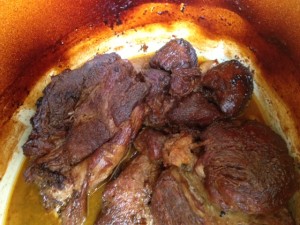
Roasted Pork Shoulder for Carnitas

We love Mexican cuisine, everything from fish tacos to chicken mole to the traditional Chiles en nogada. This weekend we made carnitas. This dish requires a pork shoulder. Naturally, in Costco fashion, the only pork shoulder available was over 14 pounds. So we cut the large piece in half and froze half. We trimmed the meat of most of the excess fat, then salted it. It’s best to then refrigerate for a day before beginning on the prep.

Here is our recipe for easy carnitas that earned rave reviews from our guests:

5 pounds pork shoulder (after trimming fat)
1 tablespoon Kosher salt
Canola oil
1 cup chicken broth
1 tablespoon Gary’s Rub (from Cook the Part, page 26)
1 cinnamon stick
2 bay leaves
1/2 teaspoon ground cumin
6 cloves garlic
Water

Heat oven to 325 degrees on convection roast.
Cut the pork shoulder into 6 inch chunks.
Heat a few tablespoons canola oil in large iron skillet on the stove top. Brown the pork pieces until well-browned. Add chicken broth to the frying pan and scrape all the browned bits from the frying pan and add to the roaster.
Generously sprinkle the rub on the browned pork.
Place the browned pork pieces into a large roasting pan.
Add the cinnamon stock, bay leaves, cumin and garlic to the roasting pan. Add water to the pan until the pork is about 2/3 covered with the liquid.
Roast for 4 hours or until liquid cooks down and pork falls apart when probed with a fork.
Remove pork from the liquid and shred, discarding any additional fat.
Place in a large roasting pan and pour a few tablespoons of liquid over the meat.
Cover with foil and refrigerate.
Before serving, remove the foil and heat in the oven in 350 degree oven until warm or crisp up as much as desired.
Serve with guacamole, chopped red cabbage, red onion, black beans, purchased or homemade salsas.
We served this with warmed corn tortillas or lettuce to be used for lettuce wraps.

Good with a fresh Mexican salad to start.

Share

Creating Great Family Chemistry: Fun with Jesse and Molecular Gastronomy

Wednesday, April 3rd, 2013 No comments

By Bryna Kranzler

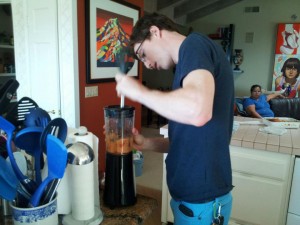
Maybe this isn’t how you have fun with your kids, but it is how I do.Last summer, when Jesse was home for a visit, we had a free day together so I broke out a molecular gastronomy kit we had bought, and decided to have fun with it. After watching the video about all the amazing things we could do, we picked a few projects.

First we thought we’d make fruit caviar. So we pureed some peaches and squeezed the grapefruit…

Making Fruit Caviar 300x225 Creating Great Family Chemistry: Fun with Jesse and Molecular Gastronomy

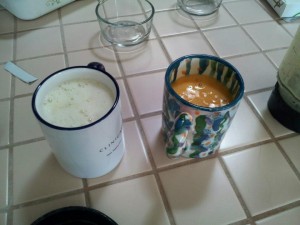
then mixed each juice with sodium alginate.

Juice mixed with sodium alginate. 300x225 Creating Great Family Chemistry: Fun with Jesse and Molecular Gastronomy

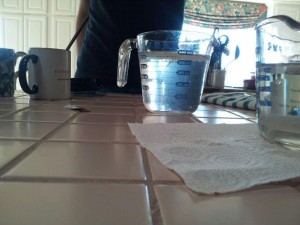
And dropped little pearls of it into a mixture of calcium citrate in water.

Photo 3 300x225 Creating Great Family Chemistry: Fun with Jesse and Molecular Gastronomy

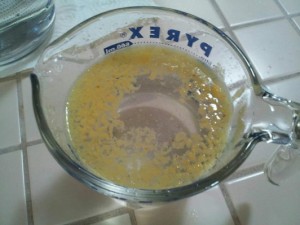
Although Jesse had gotten an A in AP Chemistry, and I had been in Honors Chemistry (back at a time before molecular gastronomy existed and the laws of chemistry were different), it hadn’t occurred to either of us that citric acid (we had added OJ to the peach puree to thin it) might interfere with the ability of sodium alginate to gel.

Photo 4 300x225 Creating Great Family Chemistry: Fun with Jesse and Molecular Gastronomy

So that didn’t work. Or look very appetizing.

Photo 5 300x225 Creating Great Family Chemistry: Fun with Jesse and Molecular Gastronomy

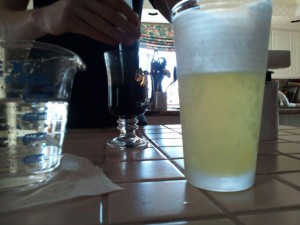
So we decided to make balsamic vinegar caviar. Start by putting a cup of oil into the freezer to chill.

Photo 6 300x225 Creating Great Family Chemistry: Fun with Jesse and Molecular Gastronomy

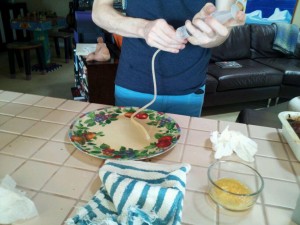
After heating balsamic vinegar and agar agar, we extrude droplets of it from the syringe that arrived with the kit into the cold oil. It worked!

Photo 7 300x225 Creating Great Family Chemistry: Fun with Jesse and Molecular Gastronomy

This is what Balsamic Caviar looked like when we were done:

Photo 8 300x224 Creating Great Family Chemistry: Fun with Jesse and Molecular Gastronomy

So we got more ambitious and decided to make balsamic spaghetti.

Photo 9 300x225 Creating Great Family Chemistry: Fun with Jesse and Molecular Gastronomy

Worked beautifully (even if it looked more like squid ink pasta)

Photo 10 224x300 Creating Great Family Chemistry: Fun with Jesse and Molecular Gastronomy

We set it aside to serve over fresh strawberries. So we mixed some peach puree with agar agar, and that worked, too!

Photo 11 300x225 Creating Great Family Chemistry: Fun with Jesse and Molecular Gastronomy

Peach puree spaghetti

Photo 12 300x225 Creating Great Family Chemistry: Fun with Jesse and Molecular Gastronomy

On to the main course: Goat cheese spheres, which we would serve with balsamic spaghetti.
First we blended water and calcium algenate.

Photo 13 300x225 Creating Great Family Chemistry: Fun with Jesse and Molecular Gastronomy

Next, we combined goat cheese with a little milk and calcium lactate, and dropped it into the mixture of water and calcium algenate.

Photo 14 225x300 Creating Great Family Chemistry: Fun with Jesse and Molecular Gastronomy

Voila! Goat cheese spheres with heirloom cherry tomatoes, balsamic spaghetti, olive finishing salt and olive oil.

Photo 15 300x225 Creating Great Family Chemistry: Fun with Jesse and Molecular Gastronomy

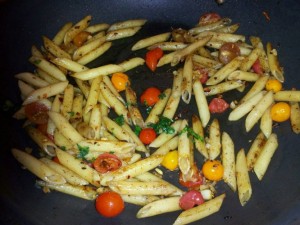
But that was only the appetizer and Jesse needed dinner, too. So he sautéed garlic and heirloom cherry tomatoes in olive oil with fennel seed and chilies, then removed them while he sautéed pasta.

Photo 16 300x225 Creating Great Family Chemistry: Fun with Jesse and Molecular Gastronomy

Once the pasta browned, he added back the sautéed garlic and heirloom cherry tomatoes.
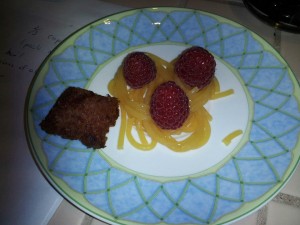
We finished off dinner (since we’d had the strawberries with balsamic spaghetti for a snack) with a ‘simple’ dessert: Peach spaghetti, fresh raspberries, and one of my homemade cranberry-kumquat-ginger macaroon.

Photo 17 300x225 Creating Great Family Chemistry: Fun with Jesse and Molecular Gastronomy

The process took 6 hours, and was some of the most fun we’ve ever had together.

Share